Picking a named item out of a pile
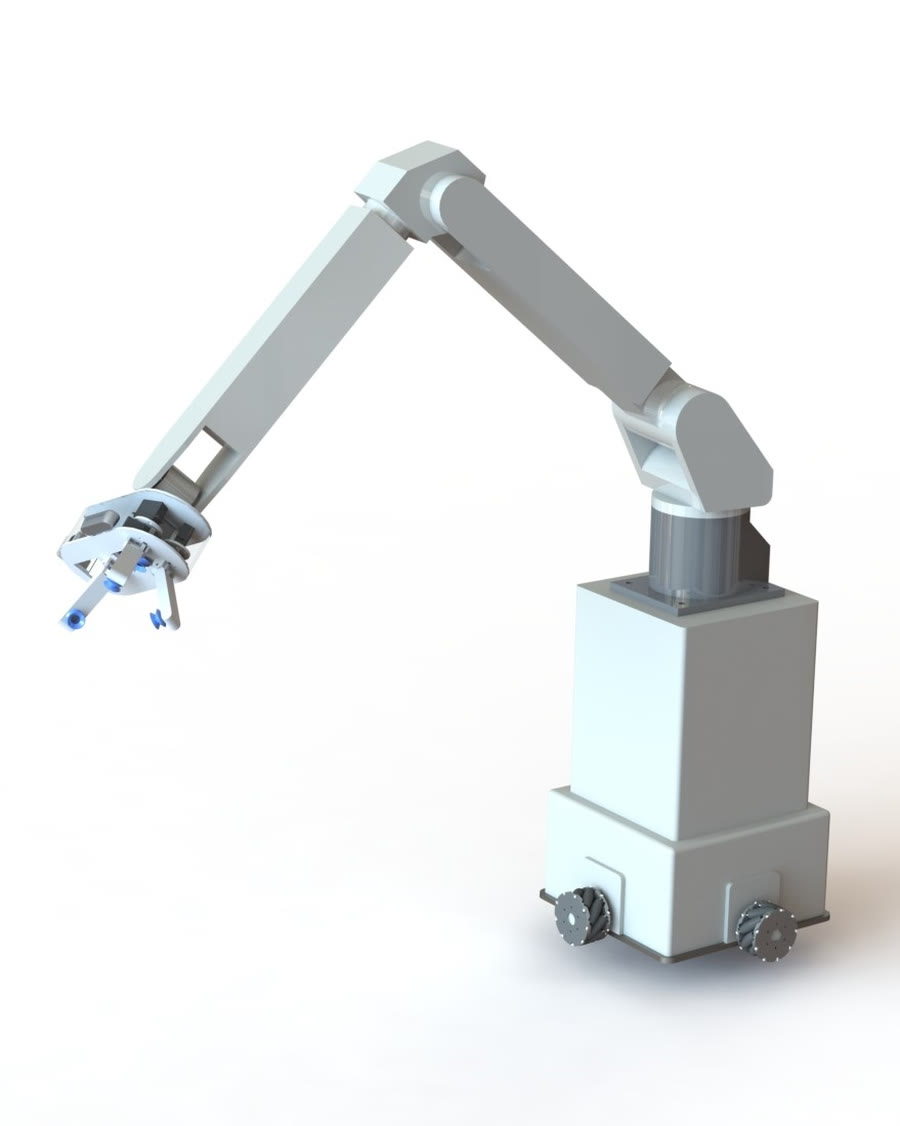
Picking a named item out of a bin of retail products is not clean pick and place. The products are jumbled, many are deformable or shiny, and several look alike from above, so the grasp has to be chosen from a point cloud of a pile rather than from a known object pose. The competition added its own constraint: the whole system had to be specified end to end, from actuator sizing up to grasp selection, and defended under elimination-round deadlines.
The system, from joint angles to grasp
- A 6-DOF manipulator designed from the kinematics up: a TRRTRT joint arrangement, DH parameters and an inverse kinematics solution for the required reach, then the work envelope swept and checked against the pickup and drop areas.
- Actuators sized from a free-body and torque analysis across the trajectory rather than picked from a catalog, with harmonic drives at the joints that carry the load and 3D-printed structure where the loads allowed it.
- A gripper designed around the challenge's actual product mix rather than as a general-purpose end effector.
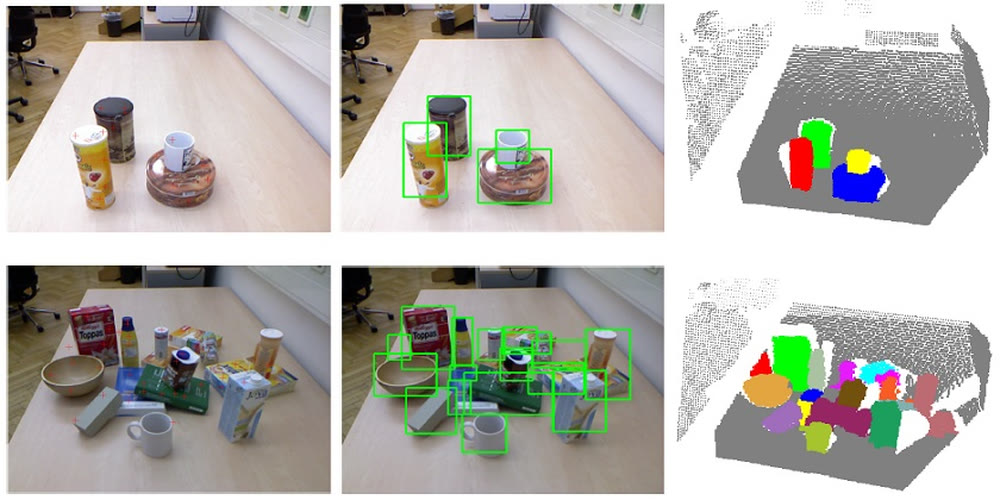
- Perception over point clouds of the picking area: instance segmentation across the pile, then localization of individual products within the cloud.
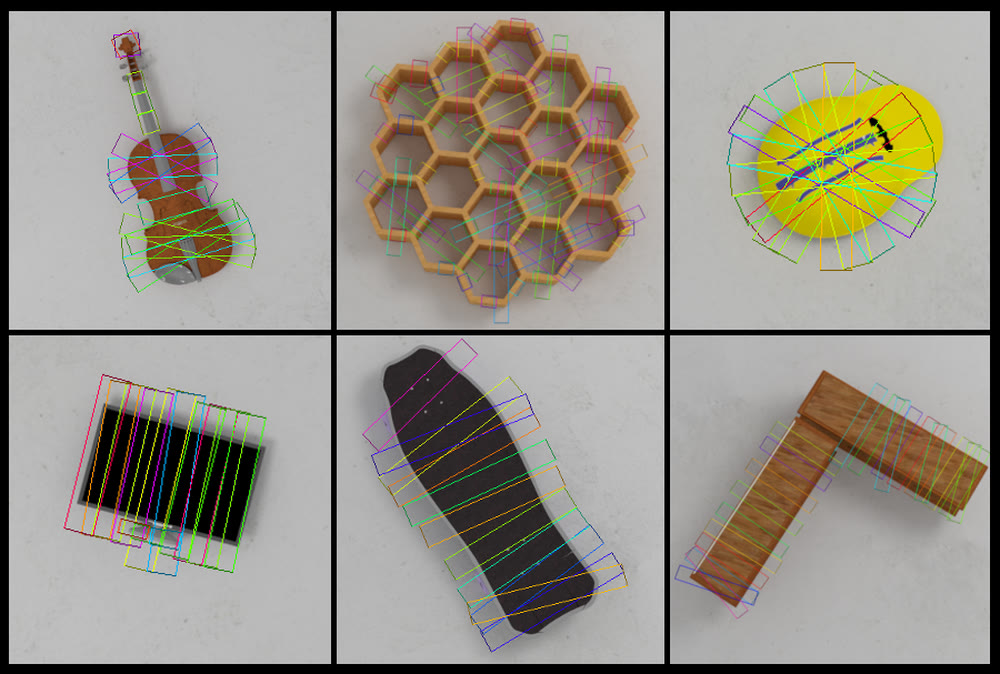
- Grasp selection on that segmented cloud, scoring candidate grasps on one product in clutter with no object model and no known pose.
- The whole system modelled in ROS and Gazebo, with the reach, grasp and place cycle run through in simulation.
The design placed second in the country out of more than 6500 teams in the Flipkart GRID 2.0 Intelligent Picking Challenge, carried through the national elimination rounds as a complete specification: manipulator kinematics, actuator sizing, gripper, and grasp selection on a segmented point cloud.
What we pushed into the hardware
- Splitting the system into stages that stand alone, segment the pile, localize a product, score a grasp, plan the reach, meant each piece could be specified and defended on its own. Under a competition deadline that is worth more than a tighter but all-or-nothing design.
- Sizing the arm from its own torque analysis rather than choosing parts first. Which joint actually constrains the design is not obvious until the free-body diagram exists, and it decided where the harmonic drives had to go and where printed parts were enough.
- Building the gripper for the specific product mix removed a large amount of grasp-planning difficulty at the hardware level, which is usually the cheaper place to solve it.